November 9, 2026
How to Build a Cyber Resilience Strategy
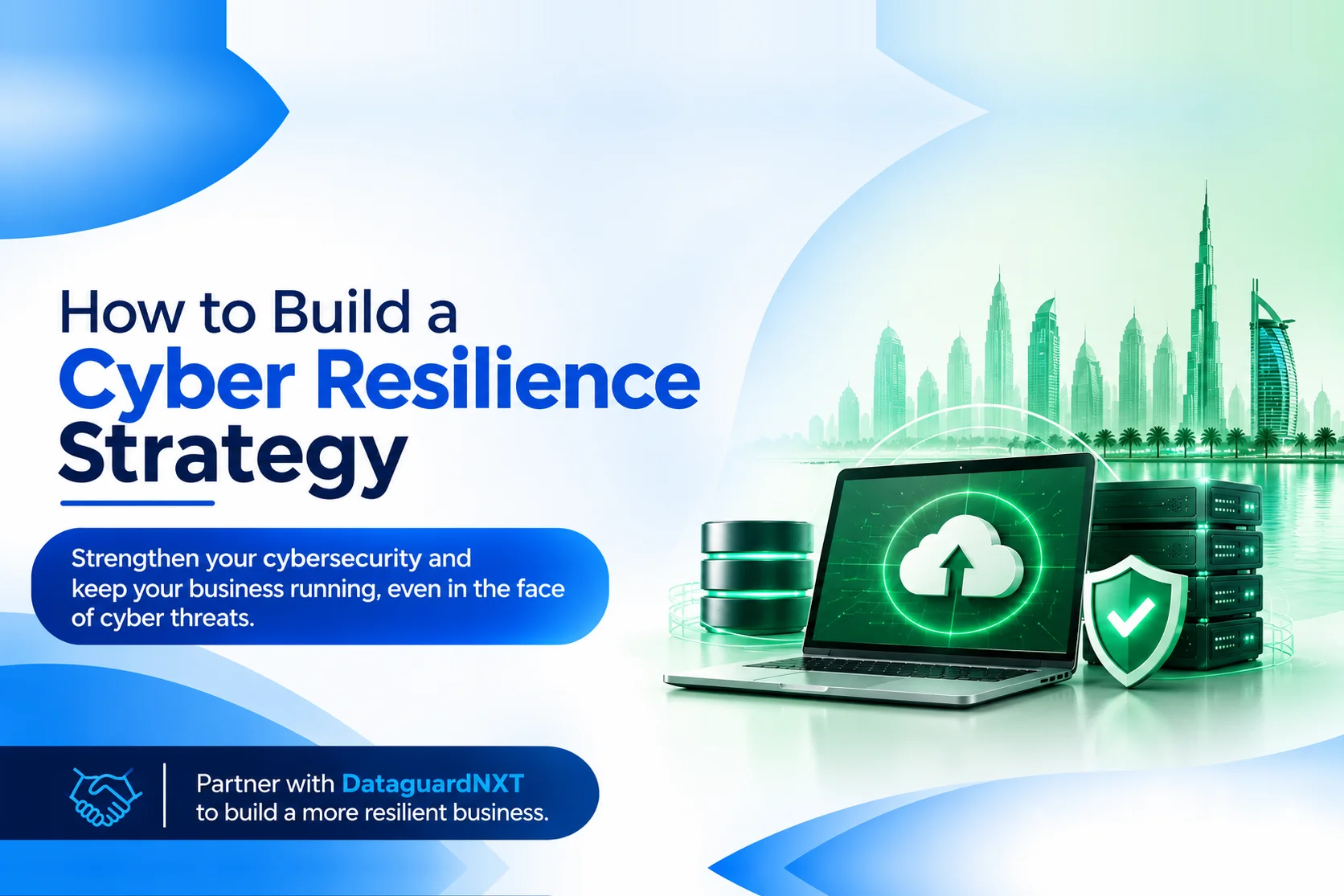
Cyberattacks, ransomware, data loss, and unexpected system outages can disrupt business operations in minutes. Traditional cybersecurity focuses on preventing attacks, but businesses also need to be prepared to respond, recover, and continue operating when incidents occur.
This is where cyber resilience becomes essential. For businesses across the UAE and GCC, a strong cyber resilience strategy combines prevention, detection, response, and recovery to reduce disruption and protect critical business data.
1 Identify Your Critical Assets and Risks
Start by identifying the systems, applications, and data your business cannot afford to lose. Conduct regular risk assessments and Vulnerability Assessment and Penetration Testing (VAPT) to uncover security gaps and prioritize vulnerabilities.
2 Strengthen Your Cybersecurity Defences
Use multiple layers of protection to reduce the risk of cyberattacks. This includes endpoint security, email security, access controls, vulnerability management, and Data Loss Prevention (DLP).
These measures help protect users, devices, business applications, and sensitive information from common threats.
3 Implement Reliable Backup and Disaster Recovery
Backups are a critical part of cyber resilience, especially during ransomware incidents and system failures. Maintain secure backup copies, define recovery objectives, and test restoration procedures regularly.
Solutions such as Acronis and Vinchin can help businesses protect workloads and support recovery planning, depending on their infrastructure and requirements.
4 Prepare an Incident Response Plan
Define who is responsible for responding to a cyber incident, how threats should be escalated, and how business operations will be restored. Regular exercises help teams understand their roles and respond more effectively under pressure.
5 Monitor, Test, and Improve Continuously
Cyber resilience is an ongoing process. Review security policies, test recovery plans, monitor emerging risks, and reassess vulnerabilities as your IT environment changes.
Businesses should also measure recovery performance and update their strategy based on lessons learned.
How DataguardNXT Helps Build Cyber Resilience
DataguardNXT helps businesses across the UAE and GCC strengthen their cybersecurity posture through solutions covering VAPT, endpoint protection, email security, DLP, vulnerability management, and backup and disaster recovery.
By combining appropriate security technologies with practical guidance and technical support, businesses can improve their ability to prevent threats, minimize downtime, and recover from unexpected incidents.
Build a More Resilient Business
Cyber resilience is not just about stopping every attack. It is about reducing risk, protecting critical data, and ensuring your business can recover when disruption occurs.
Partner with DataguardNXT to strengthen your cybersecurity strategy and build greater business resilience.